Sunday, March 27, 2011

The Real Purpose of the Second Amendment--Chapter 8

Chapter 8 The Minutemen

When looking for information on the role of the minutemen in American colonial history, I came across the following piece on the minutemen. I was surprised to find out that the minutemen had a larger role than they fulfilled in the War for Independence. To compare them with our modern warriors, we could call them the colonial special ops units.

The article below, is from the website of ushistory.org, created and hosted by the Independence Hall Association in Philadelphia, PA. The site is a treasure trove of early American history. Here is a link to their website: ushistory.org.

The article, Minutemen, written by Andrew Ronemus, is found at this web address: ushistory–minutemen.
Minutemen

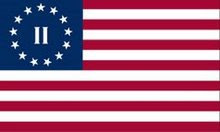
The Minutemen playing a crucial role not only in the Revolutionary War, but in earlier conflicts.

Although the terms militia and minutemen are sometimes used interchangeably today, in the 18th century there was a decided difference between the two. Militia were men in arms formed to protect their towns from foreign invasion and ravages of war. Minutemen were a small hand-picked elite force which were required to be highly mobile and able to assemble quickly. Minutemen were selected from militia muster rolls by their commanding officers. Typically 25 years of age or younger, they were chosen for their enthusiasm, reliability, and physical strength. Usually about one quarter of the militia served as Minutemen, performing additional duties as such. The Minutemen were the first armed militia to arrive or await a battle.

Although today Minutemen are thought of as connected to the Revolutionary War in America, their existence was conceived in Massachusetts during the mid-seventeenth century. As early as 1645, men were selected from the militia ranks to be dressed with matchlocks or pikes and accoutrements within half an hour of being warned. In 1689 another type of Minuteman company came into existence. Called Snowshoemen, each was to "provide himself with a good pair of snowshoes, one pair of moggisons, and one hatchet" and to be ready to march on a moment's warning. Minutemen also played a role in the French and Indian War in the 1750's. A journal entry from Samuel Thompson, a Massachusetts militia officer, states, "...but when our men were gone, they sent eleven more at one minute's warning, with 3 days provision..." By the time of the Revolution, Minutemen had been a well-trained force for six generations in the Massachusetts Bay Colony. Every town had maintained its 'training band'. The adversity that this region faced — Native-American uprisings, war with France, and potential for local insurrections, social unrest, and rioting — provided ample reason to adhere to a sound militia organization. In his recent book, perhaps David Hackett Fischer puts it best, "The muster of the Minutemen in 1775 was the product of many years of institutional development...it was also the result of careful planning and collective effort." (p. 151). By the time of the Revolution, Massachusetts had been training, drilling, and improving their militia for well over a hundred years.

Unfortunately, one thing the Minutemen lacked was central leadership. This disadvantage would lead to their dissolution. In February of 1775 Concord was one of the first towns to comply with the order to create Minutemen companies out of the militia. Of approximately 400 militia from Concord's muster rolls, one hundred would also serve as Minutemen. When a battle took place Minutemen companies from several towns combined their units. An officer from the 43rd Regiment of Foot was sent to the North Bridge in Concord with a number of light infantry. Minutemen from Concord, Acton, Littleton, and other towns combined forces. After a few volleys were fired, the British light infantry retreated back to the Concord Common area. Lacking central command, with each company of Minutemen loyal to their own town, they did not pursue the redcoats. In the running battle that ensued fifteen miles back to Boston the Massachusetts militia would see their last action as Minutemen in history. The militia would go on to form an army, surrounding Boston and inflicting heavy casualties on the British army at Bunker and Breed's Hill.

Thus, although lacking central command, the Minutemen were still better organized and battle-tested than any other part-time military. They were a vital and necessary force, playing a crucial role in not only the Revolutionary War, but in earlier conflicts. Without these "ready in a minute" men, our history may have been written in a very different way.

– Andrew Ronemus
This material is copyright by, and used with permission of, the Independence Hall Association, on the web at ushistory.org.
Picture courtesy of ushistory.org
Story courtesy of ushistory.org

Thursday, March 24, 2011

The Real Purpose of the Second Amendment--Chapter 7

Chapter 7 Obligations and Duties of Militia Members.

What exactly is a militia?
It may depend upon whose definition you use. I like the definition given by one of the founders:
"Who are the militia? Are they not ourselves? Is it feared, then, that we shall turn our arms each man against his own bosom? Congress shall have no power to disarm the militia. Their swords, and every other terrible implement of the soldier, are the birth-right of an American ... The unlimited power of the sword is not in the hands of either the federal or state governments, but where I trust in God it will ever remain, in the hands of the People."
— Tench Coxe, 1788.

The word "militia" is a Latin abstract noun, meaning "military service", not an "armed group" (with the connotation of plurality), and that is the way the Latin-literate Founders used it. The collective term, meaning "army" or "soldiery" was "volgus militum". Since for the Romans "military service" included law enforcement and disaster response, it might be more meaningfully translated today as "defense service", associated with a "defense duty", which attaches to individuals as much as to groups of them, organized or otherwise.

When we are alone, we are all militia units of one. When together with others in a situation requiring a defensive response, we have the duty to act together in concert to meet the challenge. Those two component duties, of individuals to defend the community, and to act together in concert with others present, when combined with a third component duty to prepare to do one's duty and not just wait until the danger is clear and present, comprises the militia duty. Militia
Historical Militias
The character of militias in both the United Kingdom and the United States come to us from the days of the Anglo Saxons.
For fifteen centuries it has been a fundamental principle of Anglo-Saxon government--a fact that seems to be quite generally ignored--that every citizen capable of bearing arms owes, in return for his liberty and protection, the duty of personal service to protect and defend his government in time of need. At its base it is an obligatory and not a volunteer system, though, chiefly perhaps because the ordinary need of the State requires the service of far less than the number available, in England until recently, and here as well, the service seems to have been regarded not as a bounden duty but as necessarily voluntary, as, of course, it is under the policy legislatively established. The Colonists brought with them here the militia system indigenous to the land of their origin. [Italics mine] Legal and Historical Aspects of The Militia: Guncite.com.
No other American institution bears a closer resemblance to its ancient English ancestor than our militia. An examination of historic state documents of the colonies shows that all the essentials of the English system were established here. Just as the Second Amendment of our Constitution was borrowed from the Bill of Rights of 1688, so did our colonial legislatures adopt the militia laws of the Motherland. [Italics mine] Ibid.
So we can readily see that the use of militias have solid historical basis. The founding fathers were well versed in history, and within the principles they derived from having a Judeo-Christian background, thy wisely decided to create a constitutional mandate for our several states to form militias.

Duties of militias–Riot Control
Militias are attractive forces of order for several reasons. They have often deployed with battlefield weapons—from bayonets to cannon—that can overawe or, if necessary, decimate a crowd armed only with bricks, stones, and pistols. They also, at times, have brought an impressive discipline to riots, acting with a restraint and neutrality beyond the ability of a sheriff’s posse or a squad of special police hastily recruited from among civilians. Unlike professional police forces, they are not paid full-time, but lie mostly dormant until the rare emergencies when they are needed. And unlike regular soldiers, they are—in theory—composed of the local citizenry, and therefore unlikely to oppress the rights of the people. Zachary M Schrag’s notes on militias.
Community Service

You can search the internet for other duties performed by the militias of the colonies and some states today. They were called up to put down riots, to aid volunteer firefighters as some were, aid in cleaning up after natural disasters, and serve the community in other ways. Some were the social centers of their communities, providing help and assistance to citizens and service organizations.

Summation

Militias provide safety and a sense of well-being to the communities in which they serve. The colonies feared a standing army, preferring instead local militias. Today, we have a powerful standing army which is more than a match for any state militia. The second amendment is still the best defense against a potential tyrannical government, who would do away with the amendment. It is hoped, that if the federal government ever sent members of the armed forces against the states or individual citizen, that they would refuse to carry out the orders.

If that ever happened, a second war between the states would be fought, and the death toll would be unimaginable.

Wednesday, March 16, 2011

The Real Purpose of the Second Amendment--Chapter 6

Chapter 6: Founders Intended the States to form Militias

Much evidence exists in the histories of the original colonies, and in the writings of the founders of the U.S. Constitution, that they fully intended that the sovereign states of the United States form their own militias, so much, that they made provision in the Constitution in support of militias.
Article 1, Section 8, of the U.S. Constitution, “The Congress shall have Power To . . . To provide for calling forth the Militia to execute the Laws of the Union, suppress Insurrections and repel Invasions; To provide for organizing, arming, and disciplining, the Militia, and for governing such Part of them as may be employed in the Service of the United States, reserving to the States respectively, the Appointment of the Officers, and the Authority of training the Militia according to the discipline prescribed by Congress. . . .”
As we can see by the wording in the last half of the above paragraph in section 8 of Article 1, that this is referring to state militias, organized, and officers appointed by the said states.
The Second Amendment: “A well regulated militia, being necessary to the security of a free state, the right of the people to keep and bear arms, shall not be infringed.” Not only must the states, according to the constitution, have their own militias, but also have the obligation of creating a disciplinary structure to maintain the efficient organization of the militia, and knowing how to contact in emergency every able-bodied man (and women) for immediate service.
What is a militia? Who constitutes the militia? “The United States Code (the laws of Congress) states in 10 USC 311(a) that, "The Militia of the United States consists of all able-bodied males at least 17 years of age..." The US Supreme Court ruled in US v. Miller that when called into action the militia was to show up "bearing arms supplied by themselves..." Black's Law Dictionary defines militia as, "The body of citizens in a state (read jural society), enrolled for discipline as a military force, but not engaged in actual service except in emergencies, as distinguished from regular troops or a standing army.", "The body of citizens in a state" and not the "regular troops of a standing army." The militia is distinctly different from the National Guard or the US military forces. Source.

How did the founding fathers describe the militia? Source.
"Who are the militia? Are they not ourselves? Is it feared, then, that we shall turn our arms each man against his own bosom. Congress have no power to disarm the militia. Their swords, and every other terrible implement of the soldier, are the birthright of an American... The unlimited power of the sword is not in the hands of either the federal or state governments, but, where I trust in God it will ever remain, in the hands of the people." – Tenche Coxe, The Pennsylvania Gazette, Feb. 20, 1788.

Rep. Elbridge Gerry of Massachusetts: "Whenever governments mean to invade the rights and liberties of the people, they always attempt to destroy the militia, in order to raise an army upon their ruins." (spoken during floor debate over the Second Amendment, I Annals of Congress at 750, August 17, 1789.) “What, sir, is the use of a militia? It is to prevent the establishment of a standing army, the bane of liberty." Rep. of Massachusetts, I Annals of Congress at 750 (August 17, 1789).

Alexander Hamilton: "Little more can be aimed at with respect to the people at large than to have them properly armed and equipped." (Id) {responding to the claim that the militia itself could threaten liberty}" There is something so far-fetched, and so extravagant in the idea of danger of liberty from the militia that one is at a loss whether to treat it with gravity or raillery (mockery). (Id)

Patrick Henry: "The people have a right to keep and bear arms." (Elliott, Debates at 185). "Are we at last brought to such a humiliating and debasing degradation, that we cannot be trusted with arms for our own defense? Where is the difference between having our arms in our possession and under our own direction, and having them under the management of Congress? If our defense be the real object of having those arms, in whose hands can they be trusted with more propriety, or equal safety to us, as in our own hands?, 3 Elliot Debates 168-169. "The great object is that every man be armed. Everyone who is able might have a gun." 3 Elliot, Debates at 386.

Thomas Jefferson In his Commonplace Book, Jefferson quotes Cesare Beccaria from his seminal work, On Crimes and Punishment: “Laws that forbid the carrying of arms... disarm only those who are neither inclined nor determined to commit crimes... Such laws make things worse for the assaulted and better for the assailants; they serve rather to encourage than to prevent homicides, for an unarmed man may be attacked with greater confidence than an armed man.” "A strong body makes the mind strong. As to the species of exercises, I advise the gun. While this gives moderate exercise to the body, it gives boldness, enterprise and independence to the mind. Games played with the ball and others of that nature, are too violent for the body and stamp no character on the mind. Let your gun therefore be the constant companion of your walks." Encyclopedia of T. Jefferson, 318 (Foley, Ed., 1967). "No free man shall ever be debarred the use of arms.", Proposal for a Virginia Constitution, 1 T. Jefferson Papers, 334 (C.J. Boyd, Ed. 1950)

James Madison: "A well regulated militia, composed of the people, trained to arms, is the best and most natural defense of a free country." (1st Annals of Congress, at 434, June 8th 1789, emphasis added. "As the greatest danger to liberty is from large standing armies, it is best to prevent them by an effectual provision for a good militia." (notes of debates in the 1787 Federal Convention).

George Washington: "A free people ought not only to be armhttp://www.blogger.com/img/blank.gifed and disciplined but they should have sufficient arms and ammunition to maintain a status of independence from any who might attempt to abuse them, which would include their own government." Source.
"Firearms stand next in importance to the Constitution itself. They are the people's liberty teeth keystone... the rifle and the pistol are equally indispensable... more than 99% of them by their silence indicate that they are in safe and sane hands. The very atmosphere of firearms everywhere restrains evil intehttp://www.blogger.com/img/blank.gifrference. When firearms go, all goes, we need them every hour." (Address to 1st session of Congress). Source.
In conclusion, we can easily see that it was the intention of our founders that each state develop a militia of every able-bodied citizen, owning his own firearm, and being closely regulated by the state of his residence. I submit, that many of the gun-grabbers know this, and they do not care, as their goal is for government to maintain control over society, and to provide a state sponsored military, i.e., National Guard–never the constitutionally designated militia–and county and city sherif and police forces.
The police very seldom ever save lives except in the case of hostage taking, but show up after a crime to write it up and investigate it. But, thousands each year defend and protect themselves through use of their own firearms. It is imperative that we do all we can in our power to protect our Second Amendment.

Monday, March 7, 2011

Illinois State Police refuse to release list of firearm permit holders

The Illinois State Police are setting the example how authorities should uphold the Second Amendment when asked by government officials to violate the civil rights of gun permit holders.

Showdown in Illinois Over Identifying Gun Owners

Posted on March 3, 2011 by Conservative Byte

In a showdown over the privacy rights of gun owners, the Illinois State Police are refusing to release a list identifying all firearm permit holders in the state after Illinois Attorney General Lisa Madigan determined that the information “must” be made public. Read full article in Conservative Byte dot com here.
This action on the part of the Illinois Attorney General has put her in the middle of a fire storm and a massive protest is forming. It is hoped this massive protest will send a message to all government gun-grabbers.
Massive Rally at Illinois Capitol Will Protest Release of Gun Owner Names and Personal Information

SPRINGFIELD, Ill., March 7, 2011 /PRNewswire-USNewswire/ -- The following was released today by the Illinois State Rifle Association (ISRA):

Anger over Attorney General Lisa Madigan's recent decision to make public the names and other personal information belonging to law-abiding gun owners is expected to swell the ranks of protesters at a gun rights rally scheduled for Thursday, March 10th at the Illinois Capitol.

The initial intent of the 2011 edition of Illinois Gun Owners' Lobby Day was to encourage the General Assembly to pass legislation allowing qualified citizens to carry defensive firearms. Illinois is one of only two states that prohibit citizens from protecting themselves and their families by carrying defensive firearms. The other state, Wisconsin, is expected to pass concealed carry legislation later this year. Read rest of story here: PR Newswire.
The ISRA is the state's leading advocate of safe, lawful and responsible firearms ownership. For more than a century, the ISRA has represented the interests of millions of law-abiding Illinois firearm owners. Many other states have State chapter of NRA upholding the rights of US citizens preserved by the Second Amendment.

Sunday, February 27, 2011

The True Purpose of the Second Amendment--Chapter 5

Chapter 5 What Does it Mean, To “Turn the Other Cheek?”

The following verse in the Holy Bible, is largely misunderstood by pacifist Christians, and they use the scripture to teach others not to fight back nor to defend themselves.
Matthew 5:39, “But I tell you, do not resist an evil person. If anyone slaps you on the right cheek, turn to them the other cheek also” [New International Version, ©2010]. Many will be more familiar with the wording of the King James Version: “But I say unto you, That ye resist not evil: but whosoever shall smite thee on thy right cheek, turn to him the other also” [Matthew 5:39, King James Version].
To understand this verse, we must approach it based on an understanding of the context in which this verse is included, and of the customs of the culture and era. To begin with, this was even misunderstood in Jesus’ day as he states in the Sermon on the Mount. To understand, we begin with verse 38 of the chapter:
“You have heard that it was said, ‘Eye for eye, and tooth for tooth.’But I tell you, do not resist an evil person. If anyone slaps you on the right cheek, turn to them the other cheek also” [Matthew 5:38-39 NIV].

Jesus is telling them what they had heard was in error concerning both ‘eye for an eye’ and ‘turn the other cheek.’ This is also recorded in the Book of Luke:
“But I tell you who hear me: Love your enemies, do good to those who hate you, bless those who curse you, pray for those who mistreat you. If someone strikes you on one cheek, turn to him the other also. If someone takes your cloak, do not stop him from taking your tunic. Give to everyone who asks you, and if anyone takes what belongs to you, do not demand it back. Do to others as you would have them do to you” [Luke 6:27-31 NIV].
These verses are interpreted correctly in Wikipedia:
A literal interpretation of the passages, in which the command refers specifically to a manual strike against the side of a person's face, can be supported by reference to historical and other factors.[1] At the time of Jesus, striking someone deemed to be of a lower class with the back of the hand was used to assert authority and dominance.[2] If the persecuted person "turned the other cheek," the discipliner was faced with a dilemma. The left hand was used for unclean purposes, so a back-hand strike on the opposite cheek would not be performed.[3] The other alternative would be a slap with the open hand as a challenge or to punch the person, but this was seen as a statement of equality. Thus, by turning the other cheek the persecuted was in effect demanding equality. By handing over one's cloak in addition to one's tunic, the debtor has essentially given the shirt off their back, a situation directly forbidden by Hebrew Law as stated in Deuteronomy 24: 10-13: Wikipedia Article.
Rick McFarland, of Grace Church, on the Real Answers web site, gives an easily understood answer to these verses:
It is interesting to note that Matthew 5:39 specifically states that if someone slaps you on the right cheek, you are to turn the other cheek also. As today, most people then were right-handed. If a right-handed person were to slap you, you would be hit on the left cheek. This verse is speaking of getting hit with a back hand across the right cheek rather than getting hit across the left cheek with full force.

Although getting backhanded was not as painful because it came with much less force than getting hit with the dominate hand, getting slapped backhanded was one of the biggest insults in Hebrew culture. Therefore, Jesus was really saying when someone insults us, we should not attempt to retaliate or get even, rather we should turn the other cheek. Real Answers.
Turning the other cheek tells us not to take vengeance, as we should turn aside insults and minor matters and to not start a personal war over trivia. We should pick our battles carefully and be willing to forgive.

This does not mean we are not to defend our lives, the lives of our families, or to allow others to run over us. Again, an answer from ‘Real Answers:’
in the Old Testament,
if an individual refused to fight for his country, he would be held guilty. In Numbers 32:23, Joshua warned those who would not fight for their country that their sin would find them out. The expressed meaning of this verse is that it is dishonorable and a sin not to fight in defense of one’s country when called upon to do so. According to the Apostle Paul’s instructions in 1Timothy 5:8, if you do not provide for your own household you are worse than an infidel (or unbeliever) and have denied the faith. When read in context, this verse speaks of taking care of your family financially. Clearly, this verse extends to include the physical care and protection of your family. It would do no good to be diligent in paying the bills yet refuse to offer defense against someone who would enter your home with the intent to kill your family. Therefore, these verses in Matthew are not teaching against self defense in life and death matters. Ibid.
Coming, What the founders of the constitution intended in the Second Commandment

Sunday, February 20, 2011

The Real Purpose of the Second Amendment--Chapter 4

Self-Defense in the Old Testament
What Does the Bible Say About Gun Control, Gun Owners of America, Larry Pratt.

Exodus 22:2-3 tells us "If the thief is found breaking in, and he is struck so that he dies, there shall be no guilt for his bloodshed. If the sun has risen on him, there shall be guilt for his bloodshed. He should make full restitution; if he has nothing, then he shall be sold for his theft."

One conclusion which can be drawn from this is that a threat to our life is to be met with lethal force. After the sun has risen seems to refer to a different judgment than the one permitted at night. At night it is more difficult to discern whether the intruder is a thief or a murderer. Furthermore, the nighttime makes it more difficult to defend oneself and to avoid killing the thief at the same time. During the daytime, it better be clear that one's life was in danger, otherwise, defense becomes vengeance, and that belongs in the hand of the magistrate.

In Proverbs 25:26 we read that "A righteous man who falters before the wicked is like a murky spring and a polluted well." Certainly, we would be faltering before the wicked if we chose to be unarmed and unable to resist an assailant who might be threatening our life. In other words, we have no right to hand over our life which is a gift from God to the unrighteous. It is a serious mistake to equate a civilized society with one in which the decent people are doormats for the evil to trample on.
. . . . .
Conclusion
The wisdom of the framers of the Constitution is consistent with the lessons of the Bible. Instruments of defense should be dispersed throughout the nation, not concentrated in the hands of the central government. In a godly country, righteousness governs each man through the Holy Spirit working within. The government has no cause to want a monopoly of force; the government that desires such a monopoly is a threat to the lives, liberty and property of its citizens.

The assumption that only danger can result from people carrying guns is used to justify the government's having a monopoly of force. The notion that the people cannot be trusted to keep and bear their own arms informs us that ours, like the time of Solomon, may be one of great riches but is also a time of peril to free people. If Christ is not our King, we shall have a dictator to rule over us, just as Samuel warned.

For those who think that God treated Israel differently from the way He will treat us today, please consider what God told the prophet Malachi: "For I am the Lord, I do not change..." (Malachi 3:6). What Does the Bible Say About Gun Control, Gun Owners of America, Larry Pratt. Read entire article here.
This is self-defense and protection of life and property in the old testament. However, many Christians would do away with all of the Old Testament, nullifying God’s law. Only the Old Covenant law is replaced by the New Covenant, not the civil laws God has placed in his Word for the protection of His people and the society in which we have to live. But, the same principles are repeated in the New Testament as well.
The Christian pacifist may try to argue that God has changed His mind from the time that He gave Moses the Ten Commandments on Mount Sinai. Perhaps they would want us to think that Christ canceled out the Ten Commandments in Exodus 20 or the provision for justifiably killing a thief in Exodus 22. But the writer of Hebrews makes it clear that this cannot be, because "Jesus Christ is the same yesterday, today and forever" (Hebrews 13:8). In the Old Testament, the prophet Malachi records God's words this way: "For I am the Lord, I do not change" (Malachi 3:6).

Paul was referring to the unchangeability of God's Word when he wrote to Timothy that "All Scripture is given by inspiration of God, and is profitable for doctrine, for reproof, for correction, for instruction in righteousness, that the man of God may be complete, thoroughly equipped for every good work" (2 Timothy 3:16-17). Clearly, Paul viewed all Scripture, including the Old Testament, as useful for training Christians in every area of life. Ibid.
What about “Turning the other cheek?” This will be posted soon.

Tuesday, February 15, 2011

The Real Purpose of the Second Amendment--Chapter 3

How Does God Look at Gun Control?

In searching for material for this chapter, I found the following by Larry Pratt, of Gun Owners Foundation. This is a revised version I posted in 2009. It covers the subject and I present part of it here from the web site of Gun Owners of America:
What Does the Bible Say About Gun Control?
by Larry Pratt
Executive Vice-President, Gun Owners Foundation

The underlying argument for gun control seems to be that the availability of guns causes crime. By extension, the availability of any weapon would have to be viewed as a cause of crime. What does the Bible say about such a view?

Perhaps we should start at the beginning, or at least very close to the beginning -- in Genesis 4. In this chapter we read about the first murder. Cain had offered an unacceptable sacrifice, and Cain was upset that God insisted that he do the right thing. In other words, Cain was peeved that he could not do his own thing.

Cain decided to kill his brother rather than get right with God. There were no guns available, although there may well have been a knife. Whether it was a knife or a rock, the Bible does not say. The point is, the evil in Cain's heart was the cause of the murder, not the availability of the murder weapon.

God's response was not to ban rocks or knives, or whatever, but to banish the murderer. Later (see Genesis 9:5-6) God instituted capital punishment, but said not a word about banning weapons.

God's response was not to ban rocks or knives, or whatever, but to banish the murderer. Later (see Genesis 9:5-6) God instituted capital punishment, but said not a word about banning weapons. Read Article by Larry Pratt.
Many who support gun control and would deny the right of our citizens the right to own and bear weapons according to the second amendment, like to quote the Bible to support their position. Again, we quote Larry Pratt:
Many people, Christians included, assume that Christ taught pacifism. They cite Matthew 5:38-39 for their proof. In this verse Christ said: "You have heard that it was said, 'An eye for an eye and a tooth for a tooth.' But I tell you not to resist an evil person. But whoever slaps you on your right cheek, turn the other to him also."

The Sermon on the Mount from which this passage is taken deals with righteous personal conduct. In our passage, Christ is clearing up a confusion that had led people to think that conduct proper for the civil government -- that is, taking vengeance -- was also proper for an individual.

Even the choice of words used by Christ indicates that He was addressing a confusion, or a distortion, that was commonplace. Several times in the rest of the Sermon on the Mount Christ used this same "you have heard it said" figure of speech to straighten out misunderstandings or falsehoods being taught by the religious leaders of the times.

Contrast this to Christ's use of the phrase "it is written" when He was appealing to the Scriptures for authority (for example, see Matthew 4 where on three occasions during His temptation by the devil, Christ answered each one of the devil's lies or misquotes from Scripture with the words: "it is written").

To further underscore the point that Christ was correcting the religious leaders on their teaching that "an eye for an eye" applies to private revenge, consider that in the same Sermon, Christ strongly condemned false teaching: "Whoever therefore breaks one of the commandments, and teaches men so, shall be called least in the kingdom of heaven..." (Matthew 5:19). Clearly, then, Christ was not teaching something different about self defense than is taught elsewhere in the Bible. Otherwise, He would be contradicting Himself for He would now be teaching men to break one of the commandments. Ibid.
Read the entire article, as it answers many questions about the Bible and the Second Amendment. We will discuss the article further in the next post on this subject.